Studio-Ready Activewear Capsules: What Pilates and Barre Demand From OEMs
- Share
- publisher
- HUCAI
- Issue Time
- Oct 26,2026
Summary
Pilates and Barre studios buy an outfit, not a legging. September 2026 launches from Kith Women, Gymshark and Bo+Tee show a capsule built from a support top, a capri or 7/8 bottom and a light layer. This guide breaks down the waistband, opacity and seam engineering behind that structure, and how to test it at 100 pieces per style and color before scaling a studio collection.
Studio-Ready Activewear Capsules: What Pilates and Barre Demand From OEMs
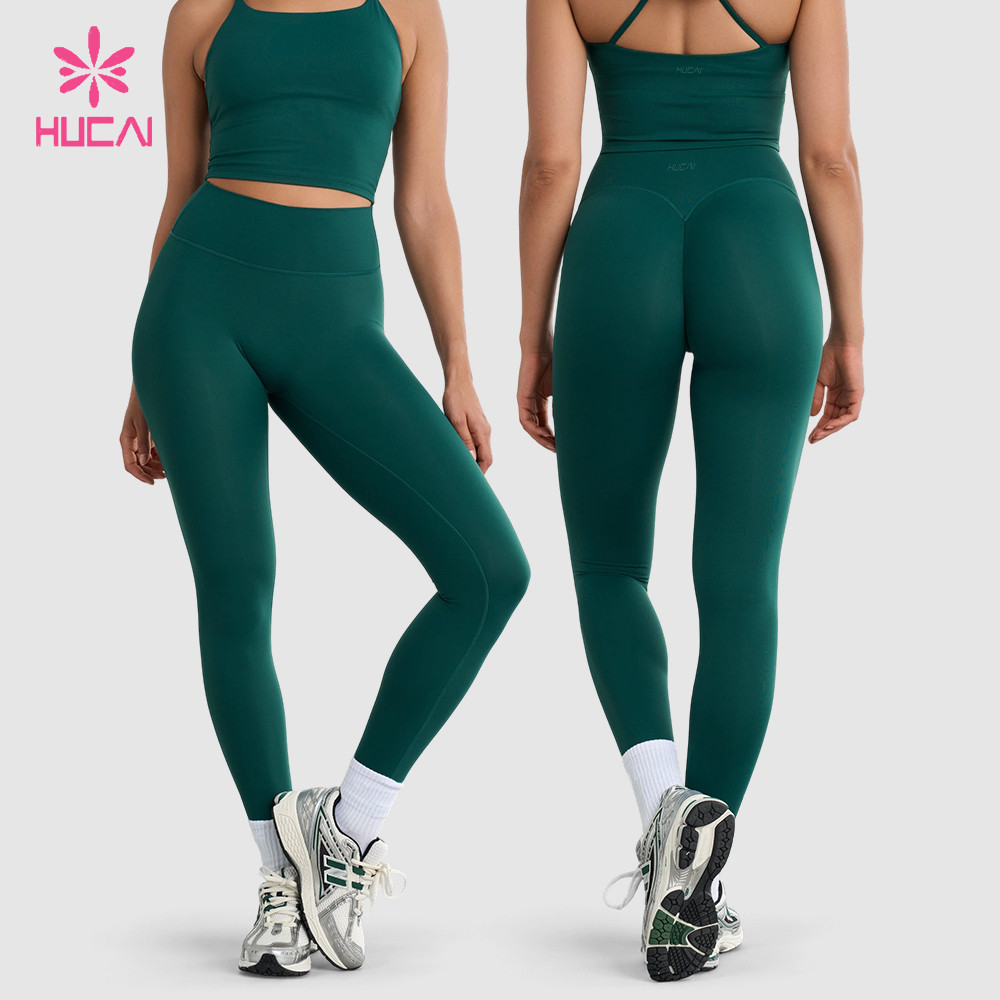
Pilates and Barre studios do not buy a single legging. They buy an outfit that works from the reformer to the street, and the labels supplying them are being judged on whether that outfit holds together as one system. HUCAI Gymwear, engineered by HUCAI Sportswear, develops studio-ready capsules as three coordinated tiers: a support top, a hero bottom in the length the community actually wears, and a light layer that survives a post-class coffee run. The commercial question for a new label is not how many SKUs a first season can carry, but whether a 100-piece color run can deliver consistent shade, opacity and band recovery across all three tiers.
Three separate September 2026 signals pointed at the same unit of sale. Kith Women's Proper Form campaign, published September 14, 2026, positioned the collection for Pilates studios, outdoor workouts and everyday wear, and paired the launch with classes run alongside instructors and studios; its structure ran from bra and tank through 4-inch and 6-inch shorts, 7/8 and full leggings, a track jacket, a romper and Pilates socks. Gymshark's current Pilates page merchandises CottonMove, Everyday Seamless and Soft Sculpt as a studio-to-rest-of-day wardrobe, recommending leggings, bras and tops alongside an oversized tee, hoodie or zip jacket. Bo+Tee's September 16, 2026 IRL look presented capri leggings, a double-layer tank and a cardigan as one finished outfit.
A studio-ready capsule is three tiers, not one style: a low-impact support top, a hero bottom in capri or 7/8 length, and a light layer. Build it in 220 to 260 GSM high-gauge interlock with 4-needle 6-thread flatlock seams, test two or three colors at 100 pieces per style and color, and approve shade across all tiers before bulk.
1. What Pilates and Barre Communities Are Actually Buying
The Kith Women's Proper Form release is the clearest public statement of how a studio-facing collection is now structured. A single campaign covers a bra, a tank, two short lengths, two legging lengths, a track jacket, a romper and Pilates socks, and the brand attached the launch to classes co-hosted with instructors and studios. Read as a merchandising signal rather than a fashion signal, the collection is not a range of eighteen independent styles. It is four shopping units that a customer assembles into one outfit: something to support, something to cover the legs, something to throw over the top, and something small that completes the look.
Gymshark's Pilates edit frames the same idea from the other direction. The page groups CottonMove, Everyday Seamless and Soft Sculpt as fabric families and then recommends the outfit around them, layering leggings, bras and tops with an oversized tee, hoodie or zip jacket. Bo+Tee's September 16, 2026 IRL look closes the loop with a capri, a double-layer tank and a cardigan styled together. The observation is consistent across all three sources: the product unit in this community is an assembled outfit, not a hero SKU.
That has a direct consequence for inventory. A new label that reads the trend as a style count will sample twelve pieces across six colors and discover that only the bra and the legging reorder. A capsule built as tiers produces the opposite pattern, because the customer who buys the bra is already wearing the matching bottom in the same session. From a production planning view, the tier structure also compresses sampling cost: one block of fabric, one shade approval, one fit session, three sellable units.
2. Three Tiers, One System: Bottom, Top and Layer
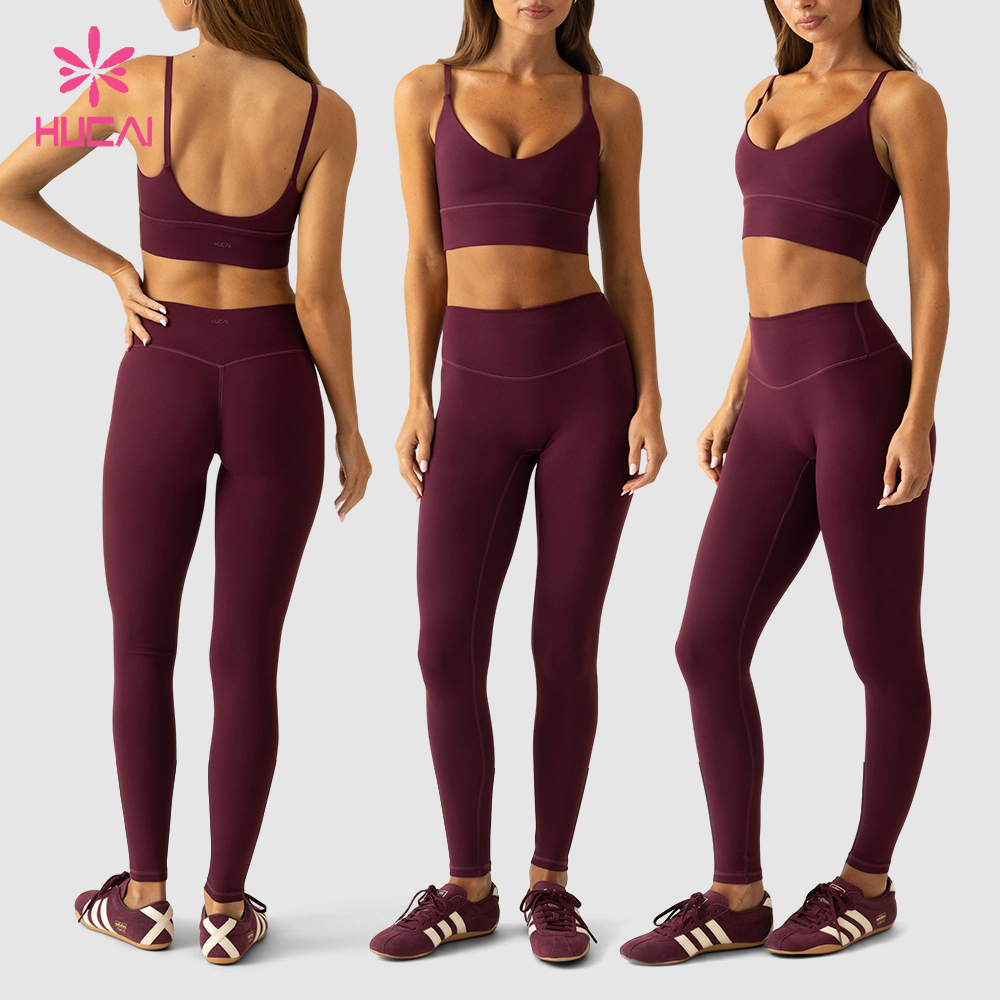
The practical way to translate this into a development brief is to define each tier by its function in the studio, not by its place in a catalogue.
Tier one, the hero bottom. The community's default is a high-rise bottom in capri or 7/8 length, with full length reserved for colder studio floors and outdoor walking. A capri sits on the calf at a point where muscle changes shape during a lunge, so hem tension matters more than it does on a full-length tight. If the hem is cut with the same recovery as the thigh panel, the leg will creep upward through a class; if it is cut too tight, it leaves a mark. HUCAI Sportswear develops the capri and the full-length version from one block so the waistband, gusset and seam placement stay identical across lengths, and only the hem and calf shaping change.
Tier two, the support top. Pilates and Barre are low-impact, but they are not low-motion. Shoulder blades move through a much larger range than the load suggests, and a strappy or scoop back that was fitted standing still will gape in a roll-down. The support answer is not thicker padding; it is a wider underband, a stable back strap anchor point and a cup shape that follows the ribcage rather than sitting proud of it. Double-layer construction carries the support where a single jersey cannot, without the bulk that makes a studio bra feel like a compression garment.
Tier three, the layer. This is where the studio-to-street brief is won or lost, and it is covered in section four because the engineering is different from the other two tiers.
Defined this way, a launch capsule is a bra, a bottom in one or two lengths, and one layer. That is four to five style numbers, enough to dress a customer for a full session, and small enough to test properly at 100 pieces per style and color.
3. Low-Impact Support Is Not Low-Engineering
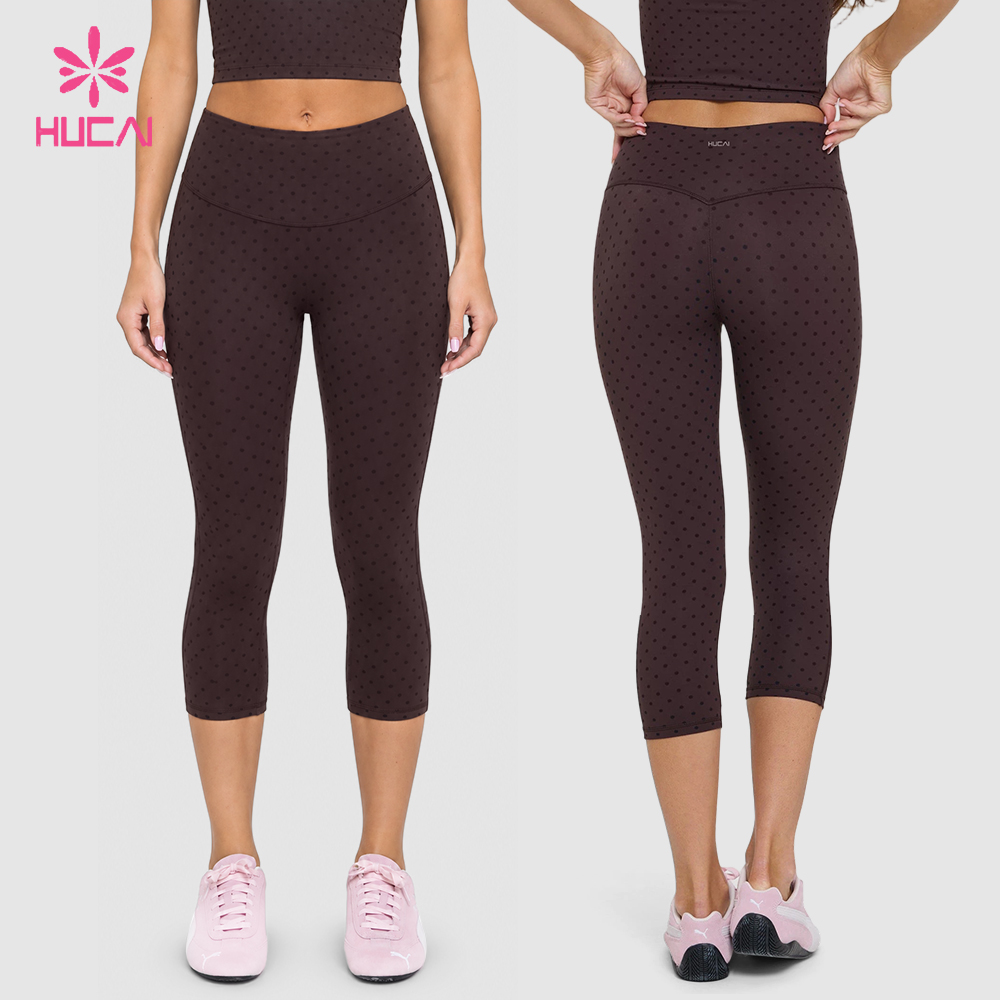
Low-impact positioning creates a specific engineering trap. Because the class is quiet, brands assume the garment can be quiet too, so they specify a light single jersey with a narrow elastic waistband. That garment photographs well and fails in use: it rolls at the waist during seated work, shows through in a forward fold, and loses shape after a handful of washes. The three failure points are consistent, and each has a manufacturing answer.
Waistband roll. A narrow elastic band concentrates pressure on a few centimetres of the waist and will fold wherever the body creases. A double-layer high-rise waistband distributes that load over a taller panel, and when the inner layer is cut slightly shorter than the outer, the band stays flat instead of curling. The same construction also gives the waistband enough body to hold a phone pocket without sagging.
Opacity under studio lighting. Pilates studios are lit for filming, and a forward fold is the least forgiving test in the category. Opacity is a function of fabric density, yarn gauge and seam construction together. A 220 to 260 GSM high-gauge interlock with a tight stitch density will hold grade 4-5 opacity at the seat, but only if the centre-back seam is placed and sewn to avoid grinning under tension. Our approach is to test the finished garment in a deep squat and a forward fold under directional light, not just the fabric on a light box, because seam behaviour changes the result.
Seam friction in repetitive movement. Barre work repeats small ranges hundreds of times, so an overlocked seam that feels acceptable in a fitting will abrade the inner thigh or underarm by the end of a class. A 4-needle 6-thread flatlock produces a flat, stretchable join that moves with the fabric and removes the ridge entirely. It costs more machine time per unit, and on a capri it is the difference between a garment that is worn twice and one that is worn weekly.
None of these are aesthetic decisions, and none of them can be recovered at the sampling stage if the fabric is chosen wrongly. They are set when the tech pack is written.
4. The Layer Tier: Wraps and Shrugs Instead of Hoodies
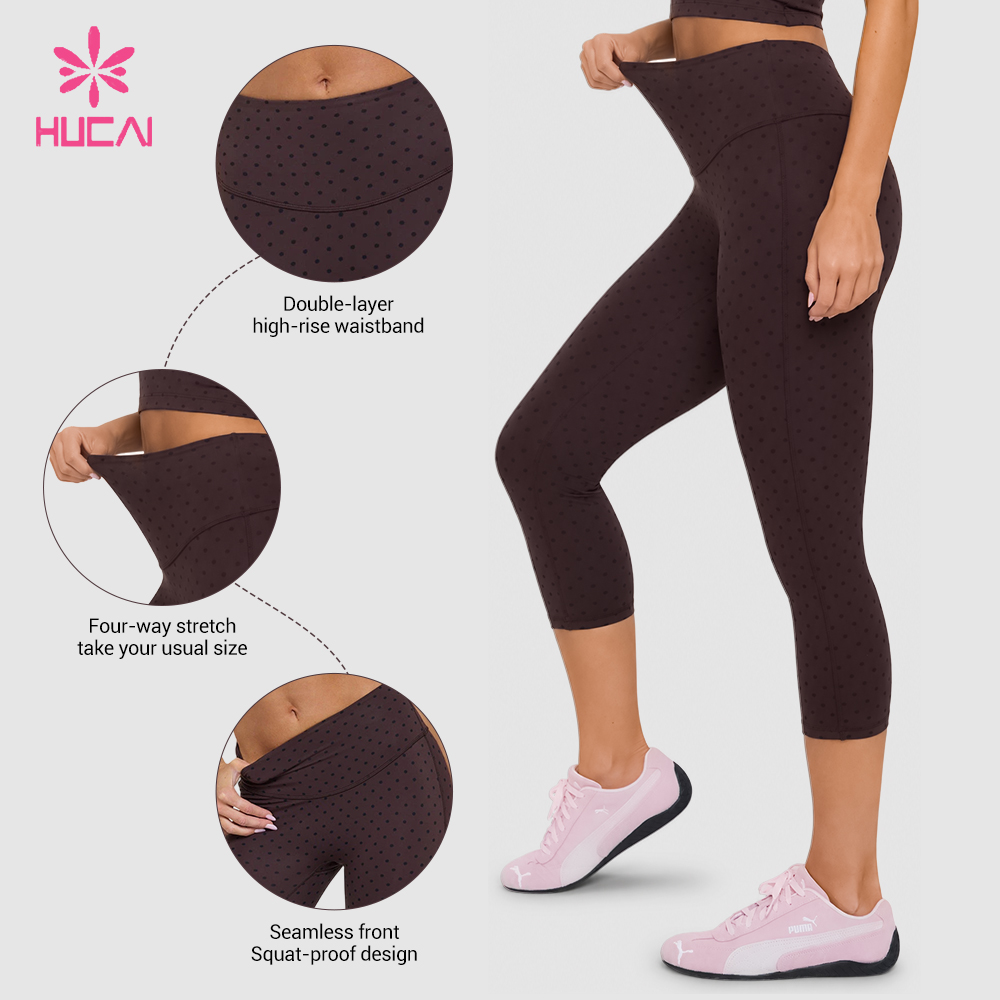
The layer is the tier most often under-designed, because it is treated as an add-on rather than a garment. The September sources suggest the opposite. Gymshark pairs its studio bottoms with an oversized tee, hoodie or zip jacket; Bo+Tee finishes the look with a cardigan over a double-layer tank. What these have in common is a light, front-closing layer that can be removed without disturbing the bra underneath, which is not what a standard hoodie does.
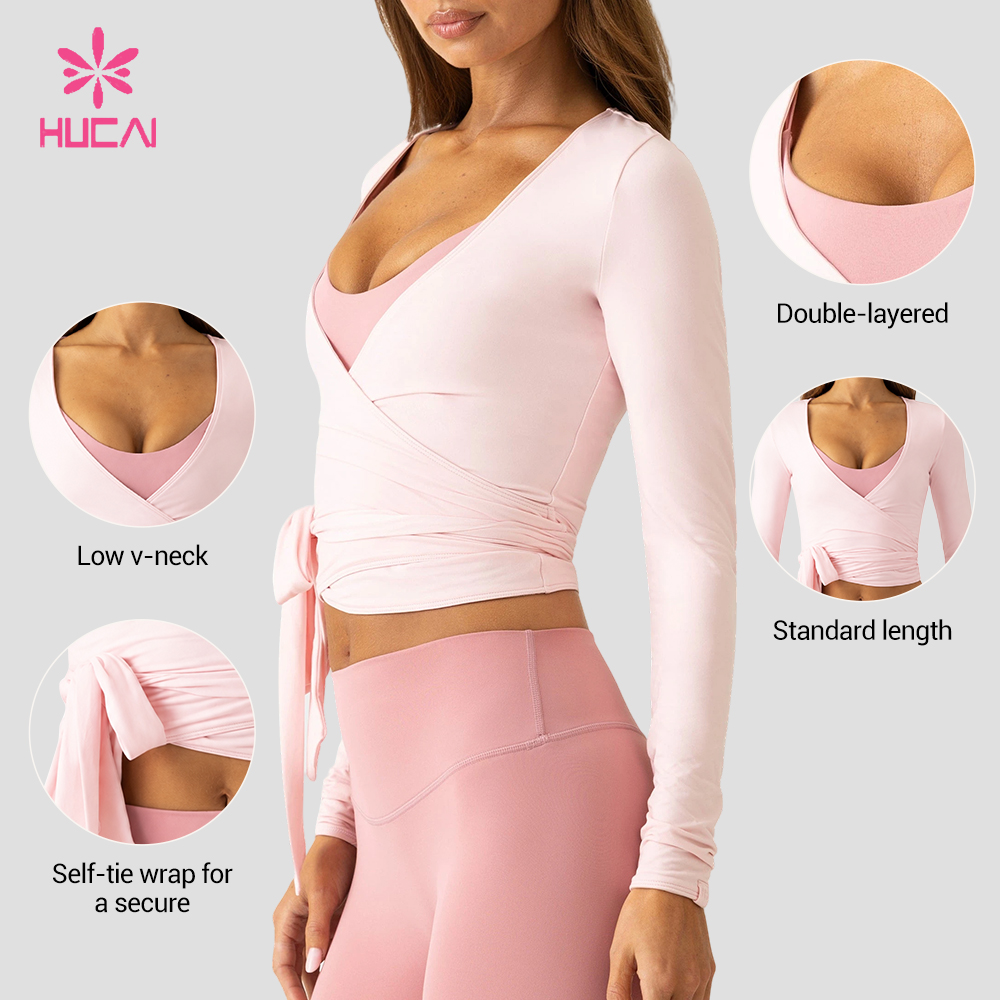
The engineering requirement follows from that use case. A wrap or shrug layer is worn over a support top, so it has to be evaluated on a body already wearing that top, not on a fitting form. Armhole depth, shoulder width and back width all interact with the bra's straps: too snug and the layer pulls the band out of position, too loose and it slides off one shoulder during a roll-down. A self-tie wrap adds a second variable, because the tie tension changes the drape across the chest and the recovery of the front panel.
Fabric choice drives the rest. A fine-gauge rib recovers at the neckline and holds the cuff, which is why it suits a shrug; a brushed fleece holds volume but will not return to shape at a wide neckline. Mixing the two in one garment, rib body with fleece trim for instance, means two different shrinkage behaviours in the same wash cycle, and the neckline is where that shows first. Bind the neckline in the same base as the body, pre-shrink both, and the layer will keep its shape through the first ten wash cycles that decide whether a customer reorders.
The commercial value of getting this tier right is disproportionate. The layer is the piece a customer wears outside the studio, so it carries the brand into a second context and it has the highest perceived value per unit of fabric. It is also the least tooling-heavy tier to add to an existing capsule, because it does not require a new bottom block.
5. Prove the Capsule With Two or Three Colors
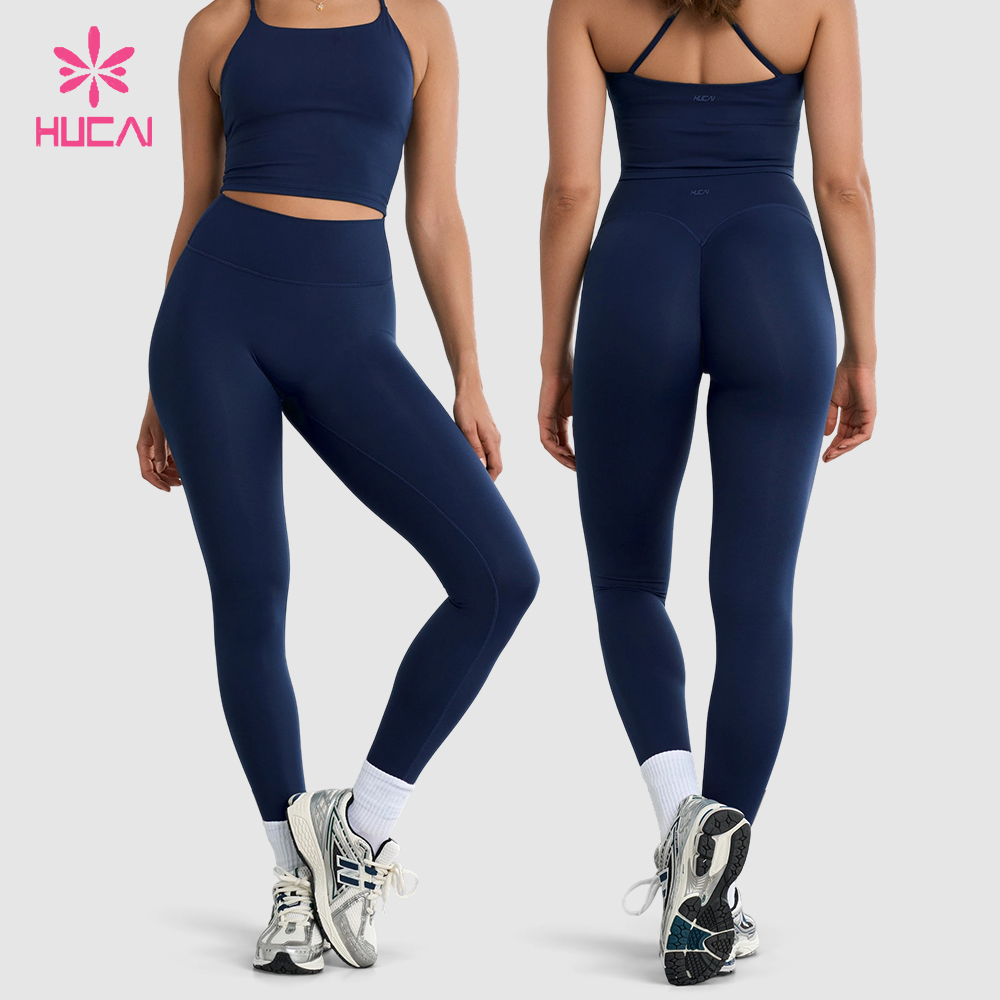
A capsule only reads as a capsule when the three tiers share a shade. That is harder than it sounds, because the tiers rarely use the same fabric. A nylon-spandex interlock bottom, a lighter knit top and a ribbed layer will each take the same Pantone reference differently, and the difference is visible when the pieces are worn together in daylight. This is the single most common reason a studio capsule looks assembled rather than designed.
The workable sequence is to approve color by fabric base rather than by style. Send the Pantone reference to each base, dye the lab dips in parallel, and review the three approved dips as a set against the intended combination. If one base cannot reach the target, adjust the reference for that base alone and re-approve the set, rather than approving each fabric in isolation and discovering the mismatch at pre-production.
Two or three colors is enough for a first season, and it is the right number for a low-MOQ test. At 100 pieces per style and color, three colors across a four-style capsule is twelve production cells; six colors is twenty-four, and the sampling and shade approval load doubles before a single unit is sold. Testing two or three colors also produces cleaner sell-through data, because the customer's choice is between shades rather than between an unfamiliar silhouette and a familiar one.
From Jean Yuan's product-development perspective, a first studio season succeeds or fails on repeatability, not on how many styles it lists. A brand selling one bra, one capri and one layer in two colors can reorder that exact block; a brand spreading twelve styles across six colors ends up with samples nobody can recut. In our Dongguan sample room the capsule is fitted as a set, with the bra band checked against the layer armhole and the capri hem checked against calf tension, before any bulk run is approved.
Capsule Decision Table: Tier, Specification and Production Reality
| Capsule Tier | Studio Function | Specification to Lock | MOQ | Sample Lead Time |
|---|---|---|---|---|
| Hero bottom | Seated work, forward folds, transitions | Double-layer high-rise waistband, no front seam, 220-260 GSM interlock, grade 4-5 opacity | 100 pcs per style and color | 7-10 working days |
| Support top | Low-impact support with full shoulder range | Wide underband, anchored back straps, double-layer cup, removable pad channel | 100 pcs per style and color | 7-10 working days |
| Layer | Arrival and departure, street context | Rib or fine-gauge knit, self-fabric neckline binding, tie or wrap closure tested over the bra | 100 pcs per style and color | 7-10 working days |
| Small units | Completing the outfit | Short length and sock or accessory pieces cut from the same approved shade | 100 pcs per style and color | 7-10 working days |
Planning a Studio Capsule for the Next Season?
Request the current fabric swatch card and a shade set approved across interlock, knit and rib bases, so the three tiers can be reviewed together before sampling starts.
Review the current women's collection6. Production Checkpoints That Decide Whether the Capsule Ships Clean
Once the tiers and the shade set are approved, the remaining risk sits in production coordination. Three checkpoints carry most of it.
Fitting as a set, not as separates. The bra, bottom and layer should be approved in one fitting session on the same fit model, in the same colorway. Approving them separately produces three garments that each pass and one outfit that does not, usually at the neckline or the armhole where the layers meet.
Sewing consistency across tiers. A flatlock that is correctly tensioned on a 240 GSM interlock bottom will ripple on a lighter top panel. Machine settings, needle size and thread tension need to be recorded per fabric, not per order, so the second colorway runs to the same standard as the first.
Inspection against the full set. Final inspection runs to AQL 2.5 with key dimensions and seam integrity checked on every unit. For a capsule, the check also includes a shade comparison across the three tiers from the same production lot, because a bottom that is half a step darker than its top is a return, not a cosmetic issue.
Timing follows from that sequence. Sample development takes 7-10 working days once fabric is available, and bulk production runs 20-25 working days from pre-production sample approval and deposit. A capsule that needs three shade rounds instead of one will not fit a seasonal drop window, which is why the color approval step is scheduled before sampling rather than after.
Frequently Asked Questions From Studio Brands and Sourcing Teams
Continue planning: compare the custom leggings range, review sports crop tops for the support tier, or add studio shorts for warm-room sessions.